
Peru is not just a tourist destination; it is one of the six cradles of world civilization. With a heritage spanning more than 10,000 years, this South American country offers a cultural, geographical, and biological richness that few places on the planet can match. From the Pacific coast to the peaks of the Andes and the vastness of the Amazon, Peru is a living testament to human evolution.
Peruvian history is a mosaic of complex cultures that dominated challenging territories long before the arrival of Europeans.
Caral and the Pre-Inca Cultures: On the northern and central coast, civilizations flourished such as Caral (the oldest city in the Americas), the Moche with their exquisite pottery, and the Nazca, creators of the enigmatic geoglyphs that can only be seen from the air.
The Tahuantinsuyo: The Inca Empire was the largest state in pre-Columbian America. With Cusco as its administrative and spiritual center, the Incas developed a road network (Qhapaq Ñan) and agricultural systems (terraces) that continue to amaze modern engineering.
The Viceroyalty and the Republic: The fusion with Spanish culture resulted in a unique blend of cultures reflected in the architecture of cities like Lima and Arequipa, and in a vibrant national identity that solidified after independence in 1821.
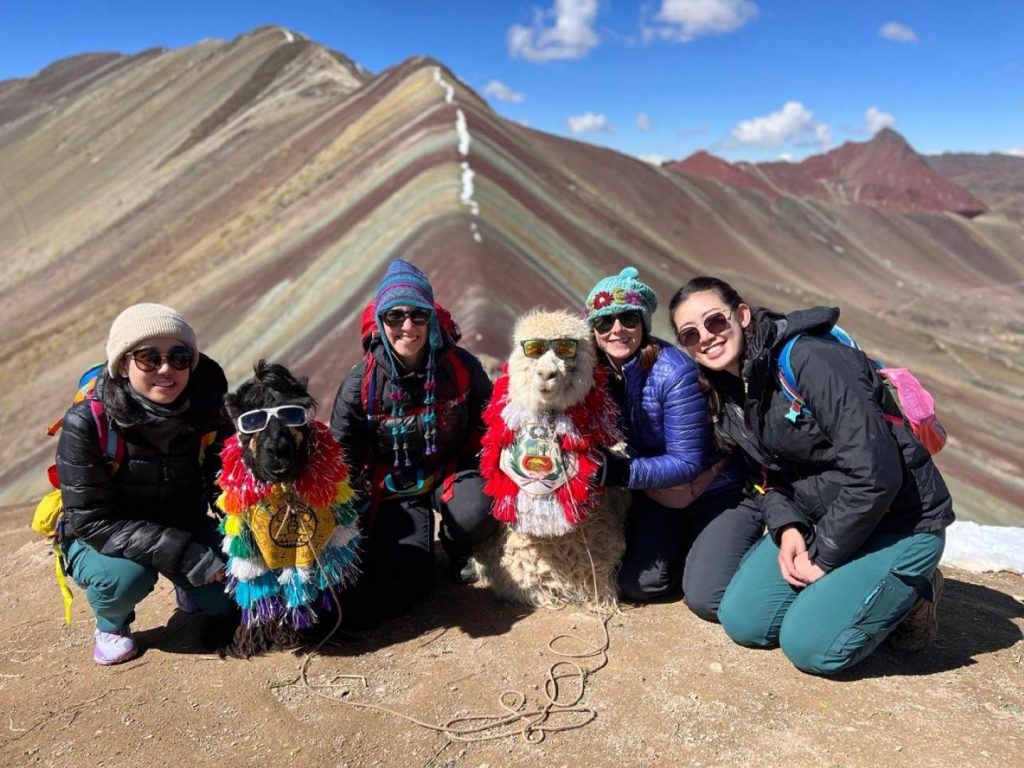
The Peruvian territory is divided into three geographical regions that dictate the way of life of its inhabitants:
The Coast: The Fertile Desert
A narrow strip that combines arid deserts with productive valleys. It is the most urbanized area, home to Lima, the capital, and where the Peruvian sea (Humboldt Current) provides one of the world’s greatest fish stocks.
The Highlands: The Heart of the Andes
Dominated by the Andes Mountains, this region is characterized by snow-capped peaks, deep canyons (like the Colca), and inter-Andean valleys. Here, the Quechua and Aymara cultures keep ancestral traditions alive and maintain a profound connection with Pachamama (Mother Earth).
The Rainforest: The Lungs of the World
Occupying more than 60% of the territory, the Peruvian Amazon is one of the most biodiverse places on the planet. It is home to indigenous communities that safeguard ancient knowledge of natural medicine and the balance of the ecosystem.
It is impossible to talk about Peru without mentioning its cuisine. Repeatedly voted the World’s Leading Culinary Destination, Peruvian cuisine is the result of centuries of fusion:
Native Ingredients: The country boasts over 3,000 varieties of potatoes, hundreds of types of corn, and superfoods like quinoa and maca.
Global Influences: The blend of indigenous techniques with Spanish, African, Chinese (Chifa), Japanese (Nikkei), and Italian influences has created an inexhaustible pantry of flavors.
In addition to the famous citadel of Machu Picchu, Peru is home to numerous UNESCO World Heritage sites:
Nazca Lines: Enormous figures etched into the desert whose purpose remains a mystery.
Chan Chan: The largest mud-brick city in pre-Hispanic America, capital of the Chimú kingdom.
Historic Center of Arequipa: Built almost entirely of sillar (white volcanic stone).
Peruvian folklore is an expression of joy and resilience. With more than 3,000 traditional festivals each year, the following stand out:
La Marinera: An elegant and vibrant courtship dance typical of the northern coast.
La Diablada: Representative of the highlands and the festival of the Virgen de la Candelaria.
Huayno: The most widespread musical genre and dance of the Andes, with regional variations throughout the country.
Cusco, Peru | Certified Adventure Tour Operator.